

BRAIN WAVES
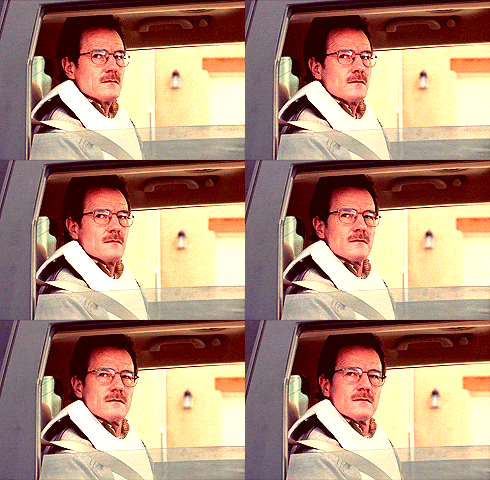
Tread lightly. How does circumstance influence the choices we make? A study looked at whether a major health shock (specifically, a cancer diagnosis) might push people toward criminal behavior, á la Walter White in Breaking Bad. The researchers combed through administrative data records and compared people at various stages in life who developed cancer. They found that crime rises by about 14 percent in the years following a diagnosis (true for both first‑time and repeat offenses). This suggests that when the future feels shorter or more uncertain, the long‑term cost of breaking the law matters less. Even big moral decisions can be swayed depending on the circumstance, not just a person’s character.
Class act. How did the Great Recession change the way we think about our own social standing? A new study in Psychological Science examined how a massive economic shift — the 2008 Great Recession — reshaped how people see their social and economic standing relative to others. They analyzed four large datasets tracking roughly 165,000 people over several decades, looking for long‑term changes in how people rated their own class before, during, and after the recession. They found that the Great Recession pushed Americans to identify with a lower social class. This lasted for years - long after the economy began to recover. And it was also true for people who earned six figures, as lead author Stephen Antonoplis explained, “Invariably, there’s someone in a study who reports an income of something like $200,000, yet identifies as lower class.” So what might have led to this change in the way we think of our own social standing? The researchers suggested that media narratives, which reported with “great fear and a sense of threat” might have made class differences more salient for people. And the same might be true for movements like Occupy Wall Street, which gave people language (i.e. “we are the ninety-nine percent”) for feeling less affluent than others. It goes to show how these kinds of historic events can reshape how we see our own place in the world.
Awwww. Many of us rush through our days, weeks, and lives, chasing goals and just trying to get everything done. But that can blind us to a very simple source of joy that’s all around us. Listen to learn more.
ON THE HIDDEN BRAIN PODCAST
You 2.0: How to Get Out of a Rut: There are times in life when the challenges we face feel insurmountable. Authors succumb to writer’s block. Athletes and artists hit a plateau. People of a certain age fall into a midlife crisis. These are all different ways of saying: I’m stuck. This week, in a favorite conversation from 2023, psychologist Adam Alter shares his research on why we all get stuck at various points in our lives, and how to break free. Then, psychologist George Bonanno answers your questions about trauma and resilience.
ON THE MY UNSUNG HERO PODCAST
Connie Sherburne’s Story: After her husband died, Connie received unexpected advice from an insurance agent: when people offer help, “let them.”
Don’t forget to send us the story of your unsung hero! Record a voice memo on your phone and email it to myunsunghero@hiddenbrain.org.
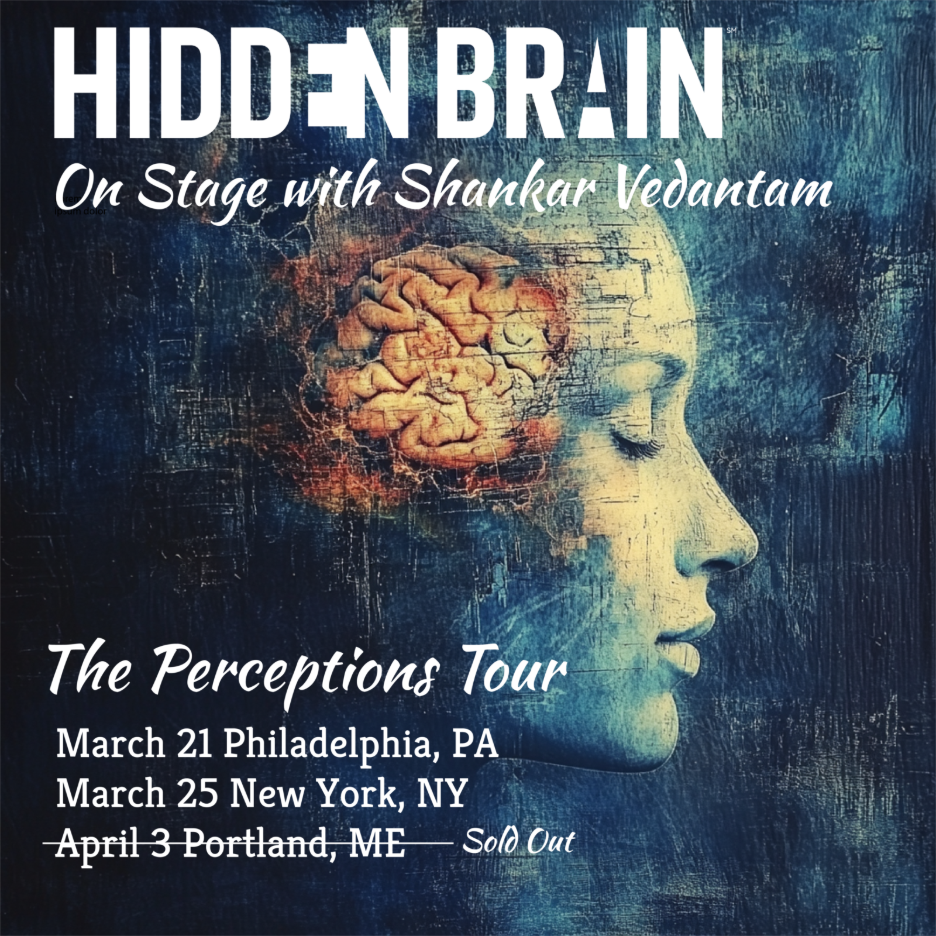
NEW STOPS ON THE HIDDEN BRAIN TOUR!
Good news! The Hidden Brain tour continues, and we’ve added more stops. Join our host Shankar Vedantam as he brings seven key insights from the first decade of Hidden Brain to the stage. You don’t want to miss it!
MIND GAMES
Which number does not belong: 99, 81, 9, or 16?
LAST WEEK’S PUZZLE
Ask this question all day long, but always get completely different answers, and yet all the answers will be correct. What is the question?
Answer: What time is it?
A MOMENT OF JOY
Have an idea for Hidden Brain? A story you want to share with us? Send an email to ideas@hiddenbrain.org. Listen to us on Spotify, Apple, Amazon Music or your favorite podcast platform.