

Talking it out vs. writing it out
Plus, who uses sarcasm the most?

BRAIN WAVES
Write or wrong. You’ve probably heard a lot about how people are more divided than ever, and how social media widens that divide. But how much of our polarization has to do with the medium of communication versus the words themselves? To find out, researchers paired people who held opposing views on contentious topics (e.g. reparations for slavery or the legalization of drugs) and had them engage in debate, either via video, audio, or text. Then, they measured shifts in understanding, perceived conflict, and how “heard” each person felt. Seventy-seven percent of people in the study predicted that communicating disagreement through writing would lead to less conflict. But they were wrong — researchers found that spoken conversations in video or audio form consistently created more understanding and less conflict than text‑based chats, even when the words were identical. “People tend to humanize the communicator more and think they have greater mental capacity,” said study co-author Juliana Schroeder.
Yeah, right. A recent study set out to see whether different humor styles predict how people use sarcasm. Researchers identified four humor styles: aggressive (used to demean others); affiliative (benevolent, relationship-focused humor); self-enhancing; and self-defeating. Participants completed surveys measuring their humor style and their everyday sarcasm habits, and the researchers looked at how those two patterns lined up. They found that people high in “affiliative humor” employed sarcasm the most. Specifically, those folks enjoyed what the researchers called “face‑saving” sarcasm. That is, the kind of sarcasm that protects a person’s social image (i.e. “nice job!” when a friend trips on their shoelace). Check out the full study for more interesting findings — and no, we’re not being sarcastic.
Flexin’. Empathy isn’t a fixed trait — we can exercise our empathy muscles. Listen to learn more.
SHOULD YOU WORRY ABOUT YOUR MEMORY?
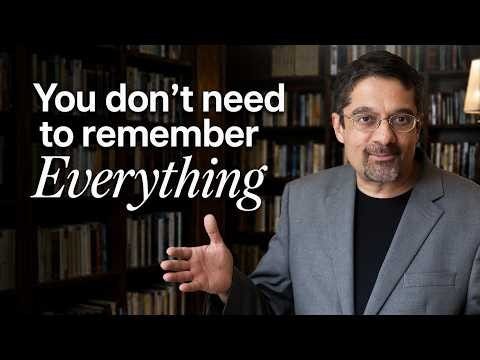
Forgetting a name or losing your keys feels like a small failure. But what if forgetting is actually one of the most important things your brain does? In our latest YouTube video, we explore the surprising (and reassuring!) science of forgetting.
ON THE HIDDEN BRAIN PODCAST
The Past is Never Dead: How does the culture in which you live shape the life that you lead? We all know that culture affects the languages we speak and the foods we eat. But anthropologist Joseph Henrich says the impact of culture goes even further, reaching into our bodies and our minds. He takes us on a journey through time to show how human cultures create a “collective brain,” and how that shared knowledge profoundly shapes who we are and how we live.
ON THE MY UNSUNG HERO PODCAST
Mike Lopes’ Story: Mike’s wife was dying after years of cancer treatment, and she could no longer recognize the people around her. Then her longtime chemotherapy nurse, Beverly, arrived.
Don’t forget to send us the story of your unsung hero! Record a voice memo on your phone and email it to myunsunghero@hiddenbrain.org.
MIND GAMES
Three monkeys share a bunch of bananas. The first monkey takes 3 bananas. The second monkey then takes half of the remaining bananas. The third monkey takes the last banana.
How many bananas were in the original bunch?
LAST WEEK’S PUZZLE
A big brown cow is lying down in the middle of a country road. The streetlights are not on, the moon is not out, and the skies are heavily clouded. A truck is driving towards the cow at full speed, its headlights off. Yet the driver sees the cow from afar easily, and avoids hitting it, without even having to brake hard. How is that possible?
The answer: It’s daytime.
IS HIDDEN BRAIN YOUR DREAM JOB?
Are you a writer, editor, or fact-checker with deep experience covering the social sciences? Do you read academic journals for fun? Do you enjoy explaining complex or arcane topics to a general-interest audience? If so, we’d be interested in hearing from you. Please send your resume and three writing and/or editing samples to Executive Producer Tara Boyle via email to jobs@hiddenbrain.org.
MOMENT OF JOY
Have an idea for Hidden Brain? A story you want to share with us? Send an email to ideas@hiddenbrain.org. Listen to us on Spotify, Apple, Amazon Music or your favorite podcast platform.