

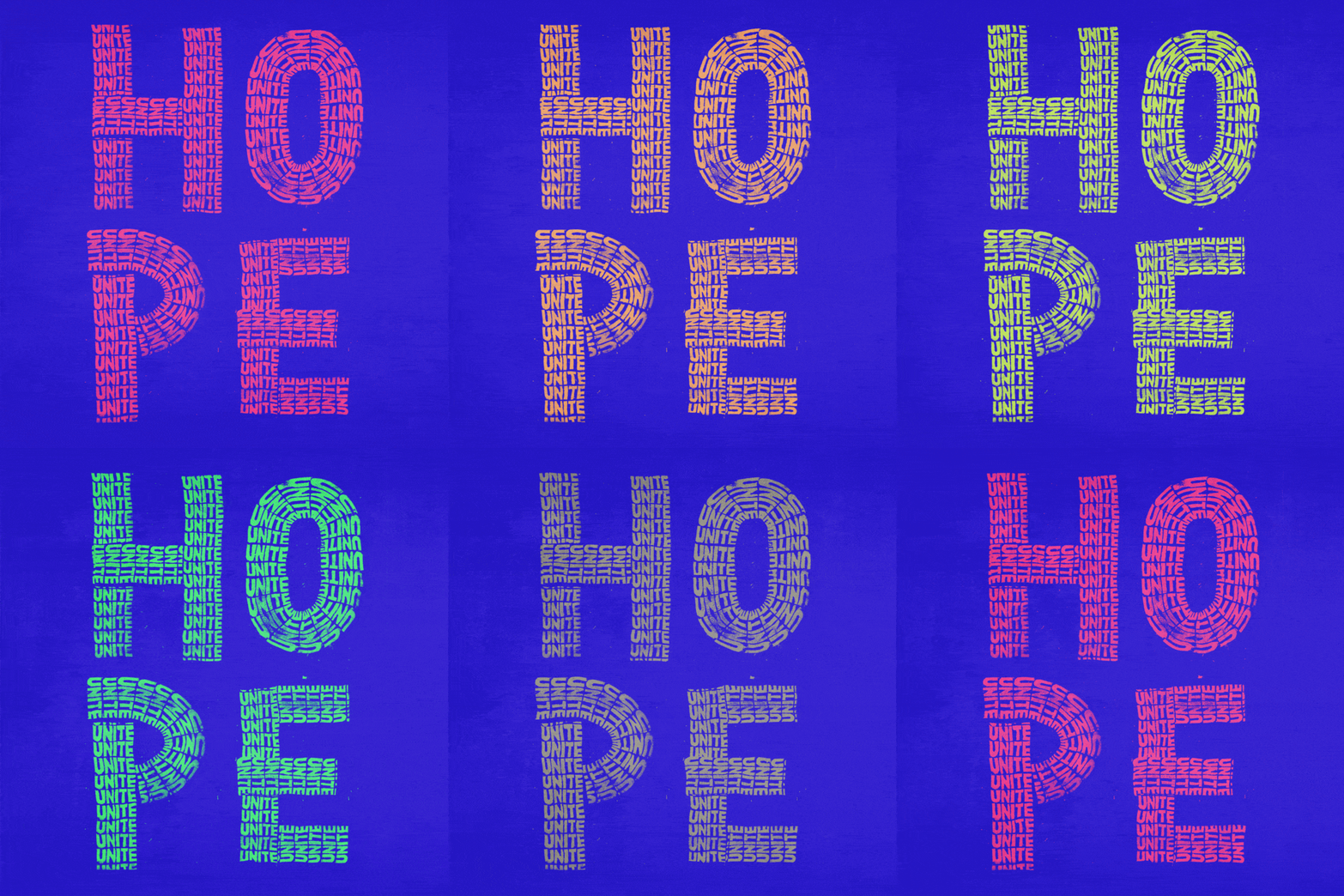
A better way to be hopeful. Hope might feel like it’s running on fumes these days, but maybe the problem is how we’ve been defining it in the first place. For the New York Times, psychologist David DeSteno (a former Hidden Brain guest) explores why so many Americans feel pessimistic about the future and argues that our modern, achievement‑based idea of hope sets us up for disappointment. He contrasts the psychological view of hope - believing you can reach a goal through your own effort - with a much older definition of hope that’s rooted in spirituality. Instead of hinging hope on personal control, spiritual traditions frame it as a steady commitment to pursue good even when the outcome is uncertain or out of reach. In this way, hope becomes a practice, not a prediction. Research backs this up. People who engage in religious or spiritual practices tend to feel more hopeful and more motivated to contribute to their communities, for example. This definition of hope doesn’t require certainty or control—it requires showing up, trying, and accepting that we’re part of something bigger than ourselves. As DeSteno puts it, “Freeing hope from our egos frees us from despair.”
Friends and lovers. Even though intercultural relationships are becoming more prevalent, many couples still face judgment and discrimination from the people around them. A recent study set out to understand which kinds of social approval—family, friends, or society at large—actually shape relationship quality for these couples. Researchers surveyed 757 people in intercultural relationships and compared how different sources of approval predicted how satisfied couples felt, while also looking at factors like cultural background, gender, and relationship length. The main finding was that, in the most satisfying relationships, the couples had friends who approved of the relationship. . “These findings suggest that different sources of social approval can buffer or exacerbate relationship quality, depending on partners’ cultural backgrounds and relationship length,” the study concluded.
Do you remember? We rely on our memory to understand the world. But what if our memories aren’t true? Listen to learn more.
ON THE HIDDEN BRAIN PODCAST
You 2.0: Trusting Your Doubt: This week we look at the hidden power of doubt — not as weakness or indecision, but as a tool that helps us make better choices and navigate an uncertain world.
ON THE MY UNSUNG HERO PODCAST
Joann Moschella’s Story: After a car clipped her bike in San Francisco, Joann suddenly found herself laid out on the asphalt. But a kind and whimsical hero stopped to help her get back on her feet.
Don’t forget to send us the story of your unsung hero! Record a voice memo on your phone and email it to myunsunghero@hiddenbrain.org.
MIND GAMES
A man got into a ship and could see more than four continents at the same time. How is this possible?
LAST WEEK’S PUZZLE
Two mothers and two daughters went out to eat. Everyone ate one slice of pizza, yet only three slices were eaten, total. How is this possible?
The answer: They were mother, daughter and granddaughter.
A MOMENT OF JOY
Making the most of a snowstorm
Have an idea for Hidden Brain? A story you want to share with us? Send an email to ideas@hiddenbrain.org. Listen to us on Spotify, Apple, Amazon Music or your favorite podcast platform.