

How to talk to yourself
Plus, what we get out of parasocial relationships
BRAIN WAVES
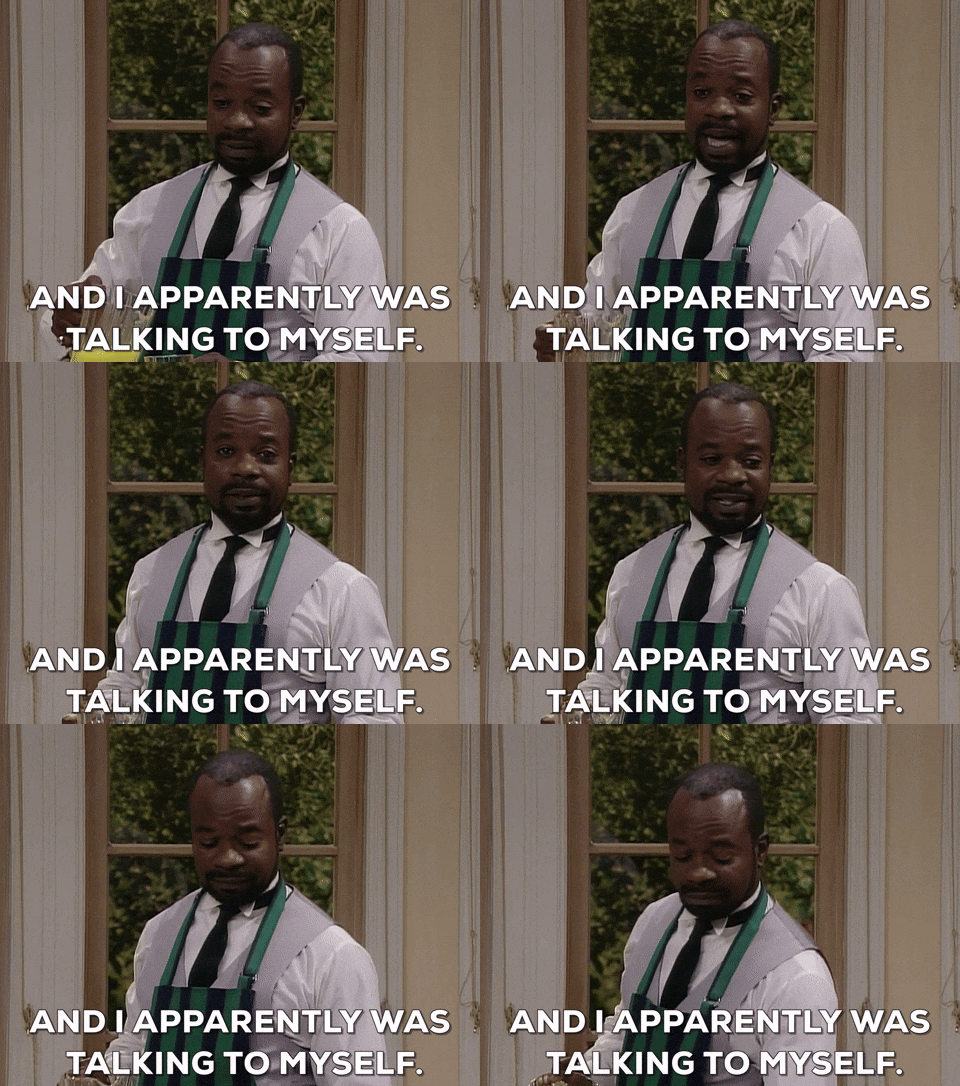
Say more. Talking to yourself isn’t just some weird quirk. As psychologist Maryellen MacDonald writes at Psyche, “self-talk is an excellent way to clarify your thinking, process your emotions, and reflect on past experiences.” But how, exactly, do you have a conversation with yourself? It depends on the purpose, MacDonald says, and offers tips for all kinds of self-talk. For example, if you’re trying to figure out your emotions, try talking about them out loud as specifically as possible. MacDonald writes, “Studies show that, the more precisely people name the emotions they’re feeling, the more benefit they get from talking about their emotional state.” For example, instead of “I’m upset,” you might say, “I feel hurt that my friend canceled last minute and a little worried that I’m not important to them.” For more ideas on how to talk to yourself, read MacDonald’s full piece at Psyche.
Invisible friends. Parasocial relationships — a one-sided bond with a public figure or character — might seem a little strange, but could these relationships also be beneficial? A study set out to find an answer. Researchers looked at whether parasocial relationships (i.e. with YouTubers, celebrities, fictional characters) help people meet emotional needs, and how those relationships compare to real-life relationships. They asked people to rate friends, acquaintances, and parasocial figures in terms of how well they provide emotional support. Close relationships still won, but strong parasocial bonds beat in-person acquaintances at helping people regulate their emotions. “These [relationships] may never be able to physically reach out and offer people care and support,” the study concluded, “but that does not prevent them from cheering people up when they are sad, or amplifying people’s moments of happiness.” We tend to think of these types of relationships as a last resort for lonely people, but the researchers argue they are “a valuable social resource that can help fulfill emotional needs.” Maybe that explains why we spend so much time on YouTube.
Passion project. Entrepreneurs typically have no shortage of passion. But there are other elements that may matter more when it comes to whether their projects succeed. Listen to learn more.
ON THE HIDDEN BRAIN PODCAST
You 2.0: Cultivating Courage: Why do some people act bravely in a crisis, while others flee or freeze up? Today, we bring you the second part of our You 2.0 series on the mental obstacles that can block us when we’re charting a new path. Behavioral scientist Ranjay Gulati argues that courage is a choice, and that we can strengthen the reflexes that will help us to be brave when it matters most.
ON THE MY UNSUNG HERO PODCAST
Tom Sinclair’s Story: At age 6, Tom wandered away from his family’s campsite and spent a cold night alone on the Lake Superior shoreline. A stranger walked through the dark to find him and carried him back to safety — a moment Tom believes may have saved his life.
Don’t forget to send us the story of your unsung hero! Record a voice memo on your phone and email it to myunsunghero@hiddenbrain.org.
NEW STOPS ON THE HIDDEN BRAIN TOUR!
Good news! The Hidden Brain tour continues, and we’ve added more stops. Join our host Shankar Vedantam as he brings seven key insights from the first decade of Hidden Brain to the stage. You don’t want to miss it!

MIND GAMES
Ask this question all day long, but always get completely different answers, and yet all the answers will be correct. What is the question?
LAST WEEK’S PUZZLE
You measure my life in hours and I serve you by expiring. I’m quick when I’m thin and slow when I’m fat. The wind is my enemy. What am I?
The answer: A candle
A MOMENT OF JOY
Have an idea for Hidden Brain? A story you want to share with us? Send an email to ideas@hiddenbrain.org. Listen to us on Spotify, Apple, Amazon Music or your favorite podcast platform.