

How museums affect our well-being
Plus, how shame gets in the way of love
BRAIN WAVES
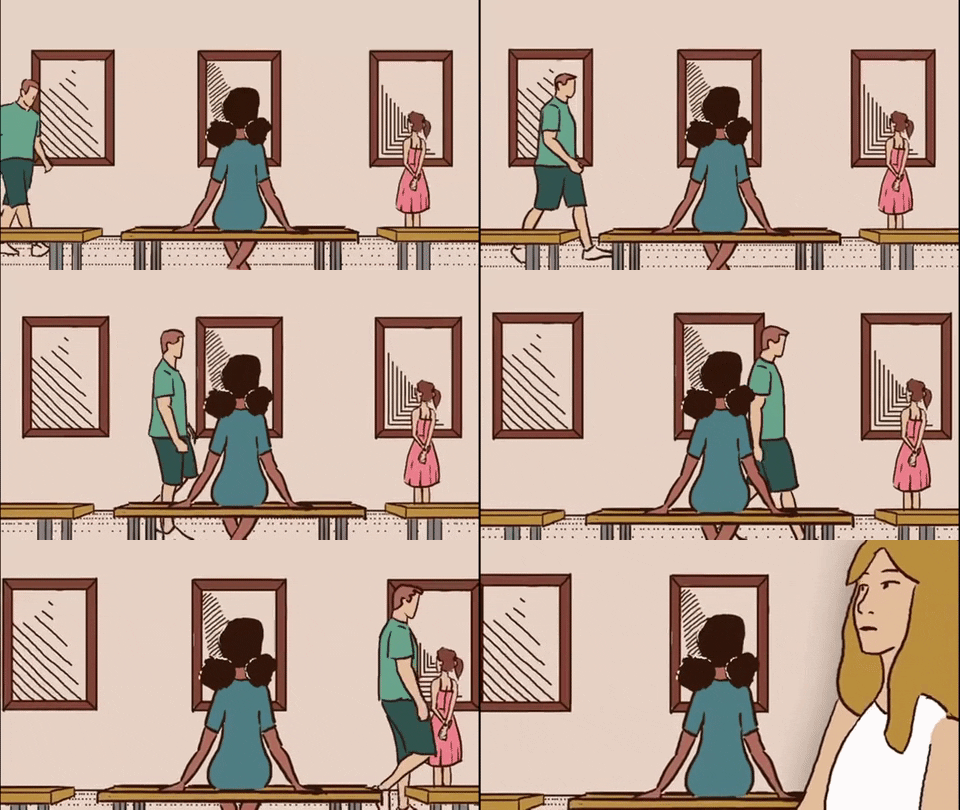
Museum mood. Do you feel good after staring at a Dali painting at a fine art gallery, or after riding a flight simulator at an aerospace museum? You’re not alone. In a recent study, researchers had hundreds of study volunteers in Croatia visit one of two museums: the Museum of Chocolate or the Museum of Broken Relationships. They tracked people’s moods and reactions before and after the visit, prompting them to rate “hedonic” statements (i.e. “I often feel joyful”) and statements geared more to their eudaimonic well‐being (i.e. “I believe I am always learning and growing as a person”). Perhaps unsurprisingly, the chocolate museum boosted in-the-moment happiness more than the broken relationships museum. But both museums made people feel positive in a deeper, meaningful way. What’s more, when people walked into a museum with the expectation that they would feel good, then tended to walk out feeling even better — a classic case of expectation meeting reality. Now we have yet another excuse to visit a chocolate museum!
That’s a shame. Do you feel loved? Over at Psyche, clinical psychologists Michaela B. Swee and Susan Murray argue that shame is one commonly overlooked but extremely destructive feeling that hinders feeling loved. “Shame is rooted in how we view ourselves in relation to others and how we think others might perceive us,” they explain. People who carry shame believe they aren’t worthy of kindness or care from themselves or others. This feeling is so deeply internalized that sometimes we have no idea we are even experiencing it. Swee and Murray argue that when we are aware of our shame, most of us try to avoid it. But examining our shame can help us better work through it. One strategy for doing this? Write a letter. “A letter written to someone you care about – later reframed and read as a letter to yourself – can help awaken a capacity to relate to yourself in a gentler, more caring way,” they write. More on how to cope with shame here.
The feeling is mutual. We often think that emotions like happiness or sadness live inside our individual minds. But if you’ve ever gone to a music concert in a big stadium or attended a political rally with like-minded voters, you know that emotions can move through crowds in powerful ways. Listen to learn more.
ARE YOU STRONGER THAN YOU THINK?
When life knocks us down, how easily do we get back up? Psychologist George Bonanno has spent decades studying this question. In our latest video, we dig into the practical tools his research highlights — including what actually helps us move forward after adversity.
HIDDEN BRAIN LIVE
Experience Hidden Brain Live at Stanford on Saturday, May 16. A decade of discovery, distilled into one unmissable event. Stanford alum and Hidden Brain host Shankar Vedantam is bringing his signature science and storytelling to the stage to share the insights that have captivated millions — and might just change how you see yourself.
ON THE HIDDEN BRAIN PODCAST
Designing a Life that Matters: We tell ourselves that meaning comes from impact, passion, or finding the “one right path.” But these beliefs can leave us feeling stuck — even when our lives look perfectly fine on paper. Behavioral scientist Dave Evans describes a new approach, borrowed from design thinking, to help us build lives that feel more alive, flexible, and real.
ON THE MY UNSUNG HERO PODCAST
Bethany Renfree’s Story: A favorite episode from the archives: Bethany was feeling overwhelmed as a single mom with three small children. But one small act of kindness by a neighbor let her know she’d be okay.
Don’t forget to send us the story of your unsung hero! Record a voice memo on your phone and email it to myunsunghero@hiddenbrain.org.
MIND GAMES
I am a number, but when you add ‘G’ to me, I go away. What number am I?
LAST WEEK’S PUZZLE
A man is pushing his car. He stops in front of a hotel and immediately knows he is bankrupt. How did he know this?
The answer: He’s playing Monopoly.
MOMENT OF JOY
Have an idea for Hidden Brain? A story you want to share with us? Send an email to ideas@hiddenbrain.org. Listen to us on Spotify, Apple, Amazon Music or your favorite podcast platform.