

How do we feel about virtual first dates?
Plus, how culture influences humor
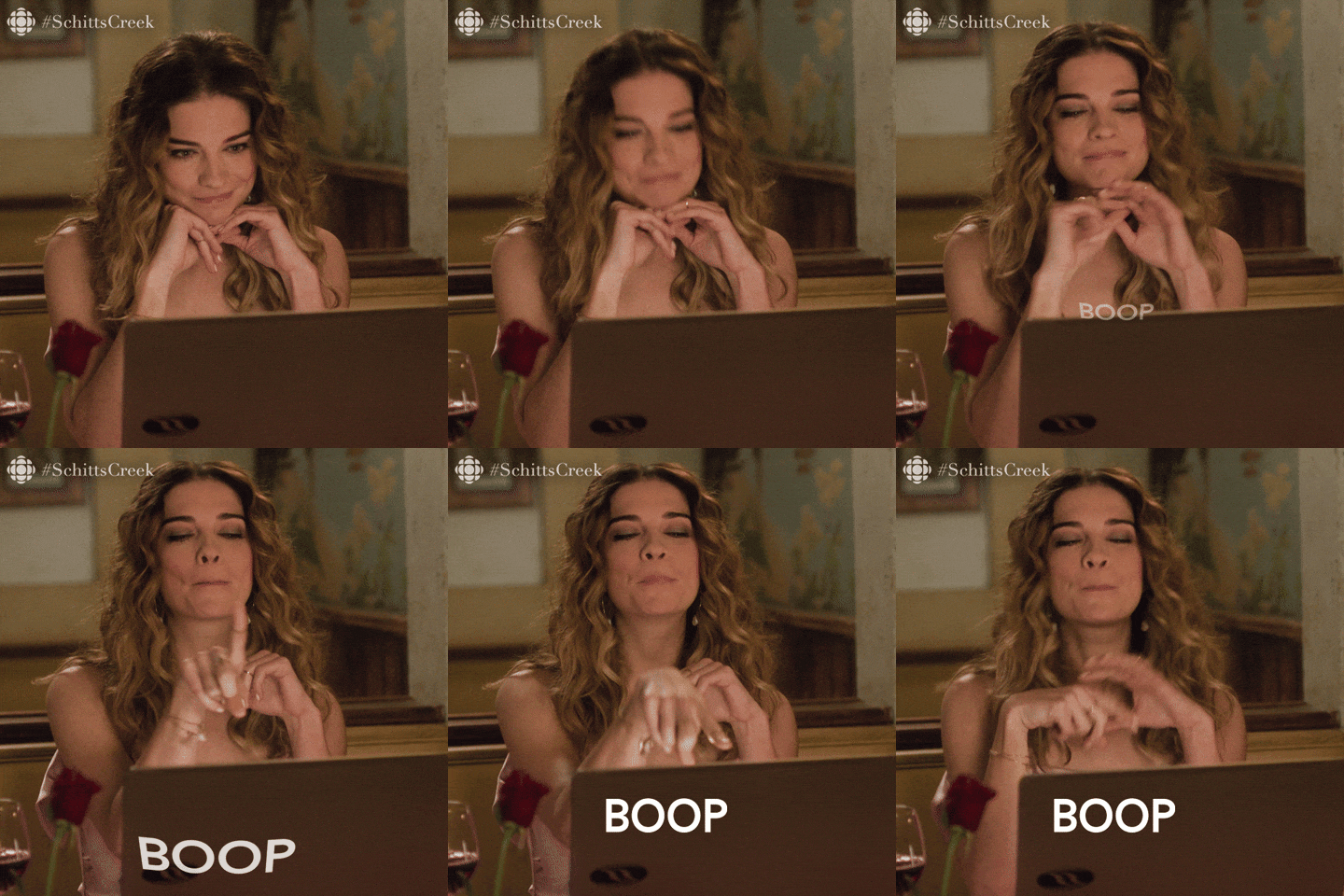
Love at first byte. Ever been on a Zoom date? Researchers wanted to know how people feel about potential romantic partners after a virtual date (like on a video platform) versus a first date in person. In one study, they had volunteers imagine going on both a Zoom date and an in‑person date, then rate how they expected to feel about both. People consistently anticipated the in‑person version would be longer, more fun, and that they would hit it off better with their date partner. It seems easier to connect with someone when you’re in the same room together, right? But when the researchers looked at thousands of actual blind dates from a matchmaking service, the results were surprising. Ratings on actual virtual and in‑person dates were very similar when it came to enjoyment, attraction, and partner impressions. The big takeaway is that we underestimate how good connection can be, even when it’s through a screen. As the authors put it, virtual dates “may be an underappreciated screening strategy for potential partners.”
Ha...ha? Is humor universal? Maybe not. New research set out to understand whether people from different cultures think about humor in the same way, or whether the kind of humor they enjoy reflects deeper cultural values. Across five studies, the authors found that Chinese participants were consistently more likely than American participants to link humor with “deeper meaning.” In other words, they had a preference for humor that wasn’t just amusing but also philosophical in nature (think “The Truman Show” versus “Ace Ventura, Pet Detective”). The study cited Chinese philosophies, like Taoism and Confucianism, for putting these kinds of expectations on humor. They wrote, “Taoism, with its emphasis on naturalness, transcendence and detachment, infuses Chinese humor with existential and philosophical depth.” In other words, cultural expectations and even definitions of humor seem to profoundly shape what people actually laugh at.
More than passion. Entrepreneurs typically have no shortage of passion. But there are other elements that may matter more when it comes to whether their projects succeed. Listen to learn more.
ON THE HIDDEN BRAIN PODCAST
You 2.0: The Practice of Patience: Patience can sometimes feel like a lost art, particularly in a culture that prizes competition and the idea of “failing fast.” But psychologist Sarah Schnitker says patience is a vital skill for success in both our personal and professional lives. We talk with Sarah about the difference between patience and passivity, and how to train ourselves to be more patient. Then, in our latest installment of “Your Questions Answered,” Jennifer Tosti-Kharas responds to listeners’ questions about how to find a calling, and how to set one aside if it’s no longer serving you well.
ON THE MY UNSUNG HERO PODCAST
Larry Maxfield’s Story: In 2007, Larry helped his brother Marty move to Utah. Marty had terminal cancer, and he and his wife wanted to be near family in the final days of his life. When they arrived, neighbors and church members — strangers — had transformed Marty’s new house into a warm home.
Don’t forget to send us the story of your unsung hero! Record a voice memo on your phone and email it to myunsunghero@hiddenbrain.org.
WHY DO WE GET STUCK—AND HOW DO WE BREAK FREE?
In a new series on The Happiness Lab podcast, Yale professor Dr. Laurie Santos unpacks the psychology behind feeling stuck—and what you can do about it. Through evidence-based strategies and conversations with leading researchers and authors, you’ll learn how to reclaim energy, embrace change, deepen social connection, spark creativity, and design a more intentional year ahead. If you’re tired of spinning your wheels in routines and thought patterns that no longer serve you, start 2026 with science-backed insights for getting creatively, emotionally, and energetically unstuck. Listen now.

MIND GAMES
Two mothers and two daughters went out to eat. Everyone ate one slice of pizza, yet only three slices were eaten, total. How is this possible?
LAST WEEK’S PUZZLE
Which number does not belong: 99, 81, 9, or 16?
The answer: 99. The rest are square numbers.
A MOMENT OF JOY
Send your name around the moon.
Have an idea for Hidden Brain? A story you want to share with us? Send an email to ideas@hiddenbrain.org. Listen to us on Spotify, Apple, Amazon Music or your favorite podcast platform.