

BRAIN WAVES
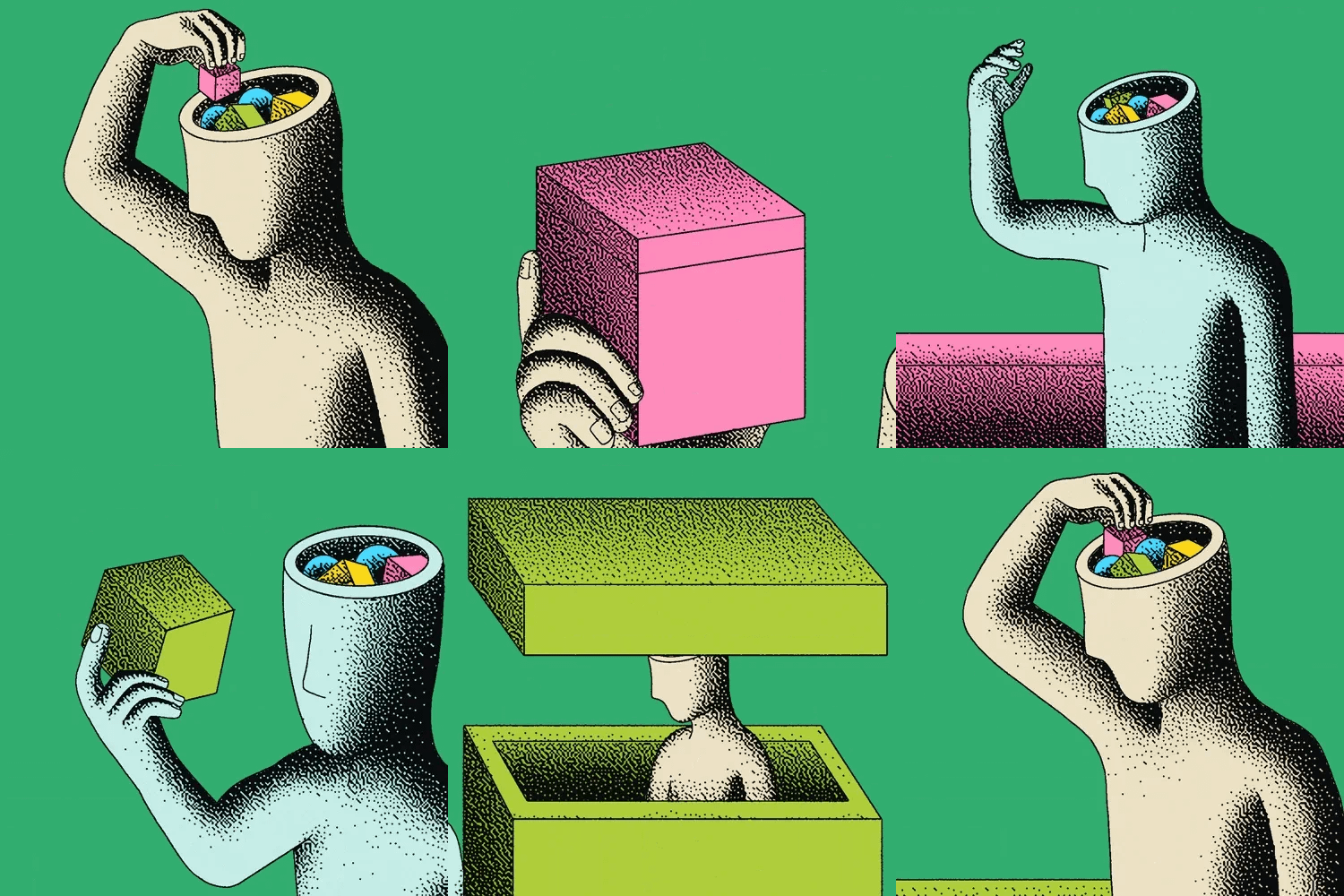
Creative minds. Creativity is good for the soul—and for the brain. A study set out to explore the relationship between creative expressions like music, dance, visual arts—even video games—and the brain’s aging process. To test this question, researchers trained a machine learning tool to detect “brain age gaps” (the difference between predicted brain age and actual age). Then they tested the tool on hundreds of people in creative fields to see how “old” their brain appeared to be. The results? Experts in tango, music, art, and gaming all showed delayed brain aging compared to non-experts, and the more skilled or practiced someone was, the bigger the delay in brain age. In the bigger picture, this suggests that creativity isn’t just fun — it could be a powerful way to protect brain health. So go ahead, bust a move.
Extreme. How do extremists see the world? Common sense might say they feel it’s a threatening place. But new research (co-authored by former Hidden Brain guest Jer Clifton) found that’s not always true. Clifton and his team aimed to find how terrorists and extremists actually view the world. Across seven studies with over 2,200 participants (who ranged from imprisoned terrorists to people who endorsed the January 6th insurrection), they measured different beliefs, and then ran various interventions, including a ten-day reflection exercise. They found that extremists consistently scored low on “meaningful world belief,” the idea that most things in life matter. In other words, it’s not necessarily that extremists see the world as more threatening than the rest of us, but maybe that they feel it’s less meaningful. But surprisingly, when researchers manipulated this belief with an intervention (for example, asking them to take a photo of something that had “value, importance, or meaning” every day for 10 days) participants saw the world as more meaningful—and their violent intentions dropped. “In short, we seem to have discovered a new way of decreasing violent extremism in society,” said Clifton.
Connect. What keeps us from taking a moment to help someone in need? We explore the “prosociality paradox,” and how to overcome this barrier. Listen to learn more.
ON THE HIDDEN BRAIN PODCAST
You Are Not Ordinary: Stories about unlikely heroes have captivated people for thousands of years. This week, social scientist Ben Rogers explores why the “hero’s journey” resonates so deeply, and how the stories we tell about our own lives can shape our sense of purpose. He explains why seeing ourselves as the protagonists of our own stories may help us face challenges with greater confidence. Then, on Your Questions Answered, psychologist Jay Van Bavel returns to respond to listeners’ comments and questions about group identities.
ON THE MY UNSUNG HERO PODCAST
Annabelle Gurwitch’s Story: After Annabelle was diagnosed with stage 4 lung cancer, a volunteer living with the same diagnosis offered advice that changed the way she saw the future.
Don’t forget to send us the story of your unsung hero! Record a voice memo on your phone and email it to myunsunghero@hiddenbrain.org.
ON YOUTUBE: YOUR MONEY SCRIPT
Ever wonder why you make the choices you do with money? Beneath the surface, many of us are guided by hidden “scripts”—patterns shaped by our past experiences and perspectives—that quietly influence our habits, decisions, and financial behaviors. Curious what your money script might be? Watch the video to find out.
MIND GAMES
Sam’s mother has four children:
April, May, June, and ...
What is the name of the fourth child?
LAST WEEK’S PUZZLE
What do the letter “t” and an island have in common?
The answer: They’re both in the middle of water.
MOMENT OF JOY
Have an idea for Hidden Brain? A story you want to share with us? Send an email to ideas@hiddenbrain.org. Listen to us on Spotify, Apple, Amazon Music or your favorite podcast platform.